French Drain or Regrading? Fix Standing Water in Hartford, WI
French Drain or Regrading? How to Fix Standing Water in Your Hartford, WI Yard
Standing water in your yard is not just a nuisance — it is a signal that water is ending up somewhere it has no path to escape. In Hartford and across Washington County, fall rains are the clearest diagnostic tool you have, because saturated ground makes slope problems and low spots impossible to ignore. The key question is whether water is pooling because the yard tilts the wrong direction, because the soil cannot absorb it fast enough, or both — and each answer points to a different fix.
What Is Standing Water Actually Telling You?
Standing water after rain means water arrived faster than the yard could shed or absorb it — and the cause is either slope, soil, or a combination of the two.
Pooling near your foundation usually means the grade slopes toward the house instead of away from it. Water follows the path of least resistance, and if that path leads to your basement wall, the slope is working against you. Mid-yard soggy patches or persistent low spots often signal a different problem: the ground there simply has nowhere to drain to.
Washington County soils tend to have significant clay content, which slows infiltration dramatically. After a heavy fall rain, clay-heavy ground stays saturated long after sandy or loam soils would dry out. That saturation can make a well-graded yard still look like it has a drainage problem when the real issue is subsurface.
When Regrading Is the Right Answer
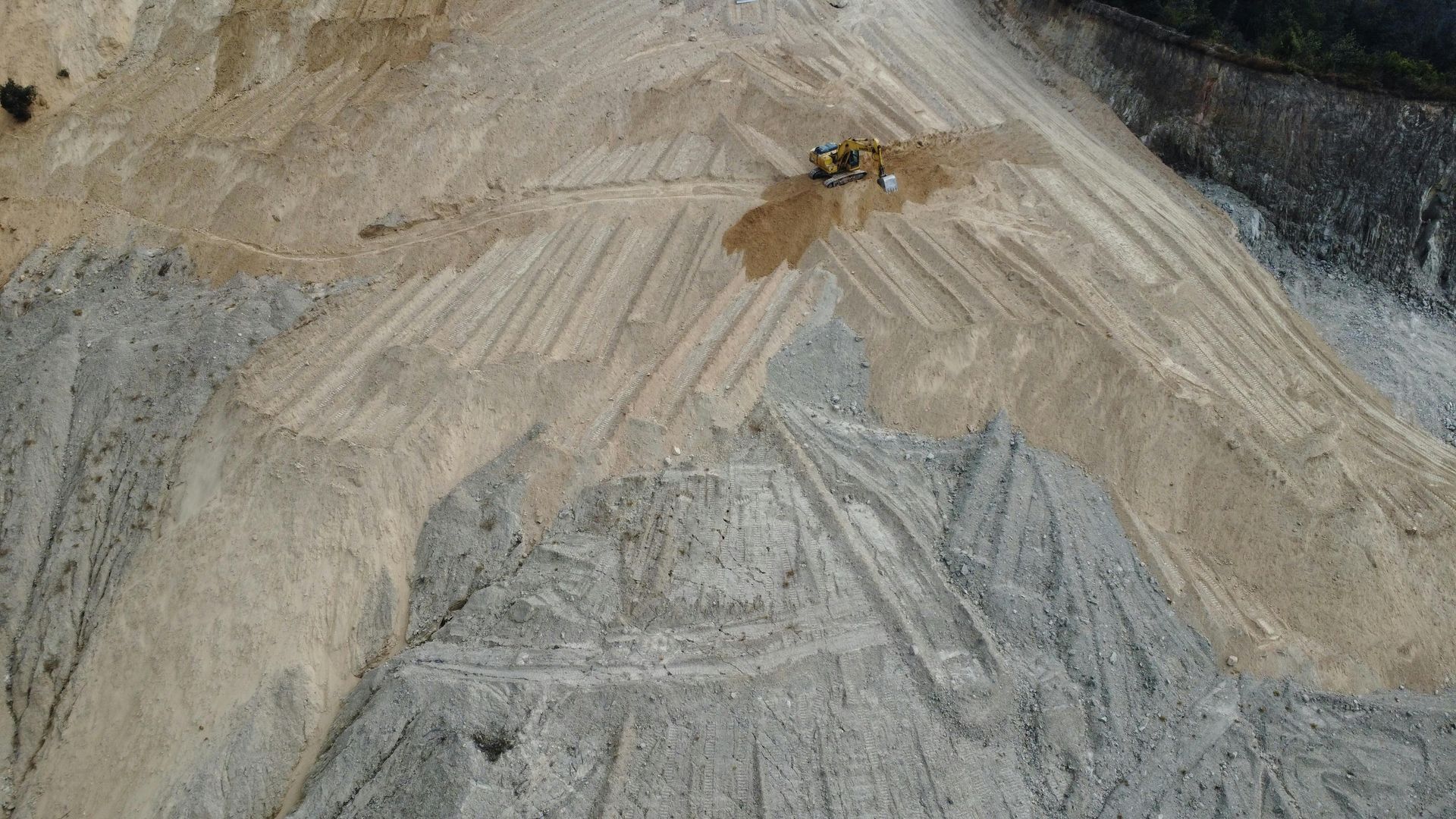
Regrading solves standing water when the yard's slope is directing runoff toward the house, into a flat area, or into a low spot that only exists because of improper pitch.
A negative slope — one that angles toward the foundation rather than away from it — is one of the most common causes of basement moisture and foundation stress. Correcting it means reshaping the soil so water sheds away from the structure at the right pitch. Even a subtle change in elevation across a few feet makes a measurable difference in where water travels.
Flat yards are another candidate for land grading services. Without positive pitch, water has no direction to move and simply sits until it evaporates or soaks in slowly. Establishing a consistent slope gives runoff a route to travel. For lots where tight tolerances matter — near structures, retaining walls, or areas being prepped for turf or hardscape — precision grading delivers a more controlled finished grade.
When Is a French Drain the Better Choice?
A French drain is the better fit when the yard's slope is acceptable but the soil is too dense or saturated to shed water before it pools — intercepting and redirecting subsurface water before it reaches the surface.
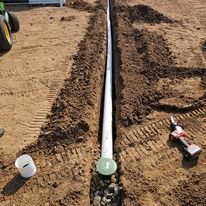
A French drain is a gravel-filled trench with a perforated pipe that collects water underground and channels it away from problem areas. It works best when the soil itself is the bottleneck — water is arriving faster than clay-heavy ground can absorb it, or the water table is high enough that the ground stays saturated even between rain events.
Common French drain scenarios include persistent soggy areas beside a driveway edge where runoff channels along pavement, low corners of a yard that hold water even on otherwise graded lots, and spots near a foundation where soil saturation keeps moisture against the wall. Installing drainage alongside a gravel driveway, for example, intercepts runoff before it undercuts the base material and creates long-term erosion issues.
Combining Both: Grade First, Then Drain
The most common Hartford yard situation is a combination problem — the slope is wrong and the soil cannot handle the volume — which is why grading should always come before drain placement.
If you place a French drain before regrading, you may find the drain ends up in the wrong position once the final grade is set. Grading first establishes where low points will actually be, which tells you exactly where the drain needs to sit to be effective. Doing both in a single project eliminates redundant mobilization costs and avoids digging up finished work.
- Water runs toward foundation: Regrading
- Flat yard holds water everywhere: Regrading
- One or two persistent low spots: Precision grading
- Soggy soil even after a dry spell: French drain
- Water along a driveway edge: French drain
- Slope problems plus subsurface saturation: Grade first, then drain
When both issues are present, precision grading sets the foundation — literally — so the drain placement that follows is based on the corrected finished grade, not the original problem surface.
What a Site Walk-Through Reveals
A professional walk-through identifies slope direction, low-spot elevations, soil type indicators, and how close water is collecting to the foundation — details that cannot be diagnosed from a photo or a description alone.
During a site visit, a contractor reads the yard the way water reads it: where does runoff travel, where does it stop, and why. Soil that stays dark and spongy between rain events is a subsurface indicator. Erosion channels show where water is moving fast. Grass that dies in patches often sits on a clay lens that holds moisture against the roots.
Before any trench is cut for a French drain, utility locating is a required step. Underground lines for gas, electric, and water are present on most residential lots, and knowing where they run before digging protects both the crew and the homeowner. Cleanup after grading and drainage work is part of the process, not a separate negotiation.
Hartford and Washington County Drainage Conditions
Fall and spring are the peak seasons for standing water complaints in Washington County, when ground saturation from rain and snowmelt combines with clay-heavy soils to keep yards wet for days after a storm passes.
Properties in and around Hartford often sit on glacially deposited soils that vary from sandy loam to dense clay within short distances. That variability means two yards on the same street can behave very differently after the same rain event. A diagnostic approach that accounts for local soil conditions gives a more accurate fix than a one-size-fits-all solution. Understanding how water moves on your specific lot — not just a generic Hartford yard — is what separates a lasting solution from a patch.
Getting the grading and drainage solution right the first time means less re-work, less disruption to turf and landscaping, and less risk of water finding a new path toward your foundation the following season.
Start by describing your yard's symptoms to a contractor who can walk the property and identify the actual cause. Grading and site preparation handled together with drainage installation produces a durable result because the two systems work as one. Schedule a site visit with JG Dirt Worx LLC to get a clear diagnosis and an honest recommendation for your Hartford or Washington County property.